Develop an end-to-end B2C platform for patients to understand Sleep Disorders, discover symptoms, perform self-screening, book diagnostic test, receive tele-consultation, optimise therapy settings and monitor long-term compliance resulting in treating more previously undiagnosed patients and achieving better clinical outcome.
The first night
Welcome → account → consent → microphoneHelp the user set up the app and prepare their phone for the first night.IntroductionFirst-night setupFigma · High Fidelity V.03
Start night → capture → stop → recoverAudio is recorded and processed on the phone, saved as FLAC and queued for upload. Test a full night and recovery after interruptions.RecordingFigma · High Fidelity V.03
Morning summary → statistics → event highlightsExplain the results and let users listen to snoring highlights. Product and clinical reviewers must approve the score, wording and consistency across phones.Morning resultsFigma · High Fidelity V.03
Results → callback → separate care intakeUsers can request a callback and give separate consent for care follow-up. This action is designed but is missing from the reviewed build.Results screen; callback is not shown in this sampleFigma · High Fidelity V.03
Beta scope
Concern about snoring → first-night awarenessFor people concerned about snoring or sleep, and family members who encourage them to seek help. Phone recordings help users understand their snoring and seek follow-up.
Reliable night → understood results → care conversionCheck whether users complete a valid night, understand the results and request a callback. Test against an agreed list of supported phones.
Beta learning → scope decision → later releaseShopping, community features and wider Health/Watch support are planned for later. The revenue model still needs a separate decision.
More about the scope
What the beta covers
Guided onboarding, consent and microphone setup.
A supported overnight recording with a clear success or failure state.
Morning results, snore statistics and user-verifiable event highlights.
An approved score definition and a clear explanation.
A callback action, separate care consent and a link the care team can trace.
Product measurement, crash diagnostics and operational support.
Scope decisions
Primary users: people concerned about their snoring or sleep, and family members who prompt them to seek help.
Near-term outcome: test whether the first night works reliably, users understand the results and callbacks reach the care team, using the agreed supported phones.
For later approval: shopping, community, wider Health/Watch support, more supported phones and features that encourage repeat use. The revenue model is still undecided.
Separate product: Atenvia is a portal for clinicians and operations staff. Its scope and staffing need separate decisions; the Airese beta can proceed independently.
What needs to pass before release
Welcome · account · permissions · first-night guideThe Expo / React Native app has Home, Sessions, Alerts and Account screens. Check the signed build, permissions, accessibility and recovery when something fails.
Capture · on-device analysis · FLAC · outboxFix processing after recording stops on iOS, memory use during long Android recordings and recovery when processing stalls. Test full nights on real phones.
Summary · snore statistics · event highlightsApprove the score and its explanation, rerun model validation and check that users understand it. Phone audio alone cannot diagnose a sleep disorder.
Book callback → fresh care token → CCCBuild the callback action, separate care consent and a lasting link to the user journey. Agree who receives the request, who responds and how success is measured.
Signed build → staging → crash proof → rollbackPostHog and native/JS error tracking are connected. Android staging build 22 has uploaded diagnostics. Still to test: readable crash reports from real phones, separate staging and recovery across the full flow.
Release checks
Current product and remaining checks
Product area
Documented baseline
Still to check
App & onboarding
Mobile experience
Expo / React Native app; welcome, account flows, onboarding, permission and first-night guidance; Home, Sessions, Alerts and Account surfaces.
Reconcile the signed beta build with the agreed flow; verify permissions, failure recovery, accessibility and supported-device instructions.
Recording & analysis
Core product value
On-device capture and audio processing, FLAC output, local sessions and an upload outbox. Snore and breathing-pause research is documented.
Resolve iOS post-stop delivery, Android long-run memory and stalled-processing recovery. Pass full overnight tests on real devices.
Results & interpretation
Clinical / product boundary
Morning reporting and highlight surfaces exist. Score formula, wording and cross-device repeatability remain decisions requiring evidence.
Approve the score definition and claims; regenerate model evidence and test user comprehension. Phone audio alone does not establish a diagnostic verdict.
Care conversion
App → care workflow
“Book a callback” is designed; the 1 October launch checklist records that the next-step action is absent from the reviewed build.
Build the CTA, separate intake consent, durable journey link and CCC workflow; agree routing, response ownership and conversion criteria.
Measurement & release
Delivery controls
PostHog analytics and JS/native error tracking are integrated; Android staging build 22 has release diagnostics uploaded.
Prove a symbolicated physical-device release crash on Android and iOS; complete independent staging, rollback and full-flow verification.
Develop a B2B practice management platform for HCP (Healthcare Professionals) to book diagnostic test and therapy, intervene and optimise therapy and collaborate with other HCPs resulting in higher process efficiency, patients satisfaction and better clinical outcome.
Proposed first release
Invite + MFAInvite named doctors, nurses and administrators. Verify multi-factor authentication, clinic-scoped roles and account revocation before live patient access.
ReferralAn authorised clinician submits the agreed minimum patient context and consent attestation. The server routes the referral to the clinic-scoped TAS queue.
Nurse bookingThe TAS nurse confirms availability with the scheduling system before booking. Test concurrent bookings and handling of unavailable slots.
Source reportUpload the original diagnostic PDF, complete the required review and publish it to the assigned clinician. Preserve source, version and audit history.
Doctor reviewThe assigned doctor views or downloads the report and acknowledges it. Verify patient-scoped access, expiring downloads and logged sensitive actions.
Current build and next steps
Inherited prototypeThe inherited React prototype uses mock data for dashboards, patient detail and PDF presentation. Its screens do not establish a working backend, authentication or operational readiness.
Before the pilotRun synthetic patients through the full referral-to-result flow. Verify cross-clinic isolation, audit logs, safe uploads and booking concurrency before approving a clinic pilot.
Later integrationsBegin with manual PDF uploads. Add one useful Zoho, scheduling or vendor source after access, patient matching, field ownership and recovery have been approved.
Release checks
Area
Written baseline
Release acceptance
Users & workflow
Doctor refers and reviews. TAS nurse triages, schedules and publishes. Administrator provisions users.
Confirm pilot clinic, nurse scheduling, review policy and role boundaries.
Inherited build
June PRD describes a React mock-data prototype: dashboard, patient detail and PDF presentation. No real backend, authentication or persistence in that baseline.
Recheck current code; prototype screens do not prove live patient access or operational readiness.
First release
Invite-only login/MFA; server-scoped referrals; nurse booking; source PDF upload, publication, download and acknowledgement.
Happy-path UAT, cross-clinic isolation, no double-booking, safe upload/retry and audit proof.
Integrations
Proposed reuse of core-api; Zoho inbound and scheduling adapters; manual uploads precede device clouds.
Confirm field ownership, patient matching, hosting/residency and vendor access before real data.
Scope boundary
CPAP monitoring, AirView, prismaCLOUD, CloudPAT and neXus 360 are later integration decisions.
Prove one useful import with provenance, reconciliation and manual fallback before expanding.
Booking ownership
The 9 September spec has the doctor select a slot. The 24 September draft moves booking to the nurse. This page uses the newer flow, which Easmed still needs to confirm.
Fix capture and recovery defects, establish independent staging, integrate useful analytics and release diagnostics.
Required checks
Candidate identified by commit and build.
Device recording, recovery and crash proof.
Deployment smoke and rollback evidence.
Phase 2 / Private rehearsal
Test the actual beta service.
Prepare iOS/Android candidates, consent, supported-device guidance, recruitment and the callback route.
Required checks
Full-flow smoke on physical devices.
Clinical/privacy wording approved.
Cohort, owners and support route agreed.
Phase 3 / Controlled beta
Learn from the first users.
Invite the approved 50–100-user cohort through direct outreach and the proposed Telegram channel.
Required checks
Activation and valid-night completion.
Results comprehension and care conversion.
Critical defects and support workload reviewed.
Phase 4 / Open launch
Open to more users after beta review.
Mid-January is conditional on beta results, critical-bug closure and production/store readiness.
Required checks
Regulatory position and validation report.
Production pipeline and recovery controls.
Force-update/kill-switch readiness; store submission planned at least two weeks ahead.
Atenvia
01 / Discovery
Agree the real handoffs.
Confirm patient identifiers, nurse scheduling, capacity source, report fields and pilot clinic.
Gate: clinic, TAS, clinical and privacy owners approve the workflow and minimum dataset.
02 / Staging test
Test the full workflow securely.
Backend/login → referral → booking → manual PDF → doctor acknowledgement, using synthetic patients.
Gate: isolation, booking concurrency, audit and full-flow UAT pass.
03 / Controlled pilot
Run with named clinics.
Provision invited users; rehearse support, user revocation, failed uploads and incident ownership.
Gate: no critical access/safety issue; TAS workload and service level are sustainable.
04 / Integration proof
Automate one useful step.
Select Zoho, scheduling or a device source using pilot friction and confirmed access.
Gate: correct patient matching, observable recovery and measured effort reduction.
Shared release decisions
EngineeringRelease builds must pass the full product flow on supported devices and staging. Confirm crash visibility, recovery, deployment and rollback. For Atenvia, also verify clinic isolation, booking concurrency and report upload recovery.
Clinical + privacyApprove score definitions and clinical wording, separate care consent, minimum patient data, retention and deletion. Verify role-based report access and the audit trail before using live patient data.
OperationsAgree the beta cohort or pilot clinic, recruitment, callback and nurse queue owners, response times and escalation. Rehearse failed recordings, bookings and uploads before the continue, pause or rollback decision.
Timing and capacity
Airese’s 11 November beta targets 50–100 invited users. The mid-January public-launch target depends on beta results, clinical/regulatory review, production readiness and store approval. Store submission is planned at least two weeks ahead. A later release may follow in February or March.
Atenvia discovery and the implementation decision precede secure staging and clinic rollout. Secure staging, a clinic pilot and one integration follow approved scope, staffing and workflow checks; their dates remain to be agreed.
Airese remains the immediate engineering priority. Atenvia discovery has a separate allocation. Overlapping bars do not imply shared engineering capacity or an approved cross-product integration.
The chart reproduces selected Start and Due fields from Notion. Past dates remain visible as recorded plans and should be reviewed with the incoming PM.
Solid: current Airese stack · Dashed: proposed Atenvia and care connections
Documented stack relationshipProposed integrationDeployment and device acceptance remain separate checks
What the incoming PM receives
TechnicalThe repositories, architecture, environment inventory and known issues. Check current branches, builds, staging and release evidence; link each open risk to an owner and a test.
AccessProvider accounts, permissions, account ownership and recovery paths. Verify successor access and keep credentials in the approved secret store.
ProductThe agreed product scope, backlog, acceptance criteria and decision history. Confirm beta priorities, the score and claims, and Atenvia’s pilot workflow.
OperationsThe support process, CCC callback route, TAS nurse workflow and escalation contacts. Agree response times and rehearse failed recordings, bookings and uploads.
View the technical and operational handover
Technical pack
Repository and local onboarding
The product wiki covers the Reverie Nx/pnpm repository, mobile app, APIs, shared packages and review process. The incoming PM should check the current branch, CI results and provider setup before planning work.
Architecture and environment inventory
Expo / React Native; native on-device analysis; Express APIs; AWS Lambda/ECR; Neon/Postgres; governed R2 collection; EAS and store distribution; Better Auth / SecureStore / Resend. Development tunnels must not become release dependencies.
Known issues and release checks
Track recording reliability, iOS processing after recording stops, Android memory use, retries and crash reporting. Each issue needs a ticket, owner, test result and next decision date.
Account and access handover
Use the access checklist for GitHub, AWS, Expo/EAS, Apple, Google Play, Cloudflare, Neon and supporting services. Confirm Easmed owns the accounts, access is limited to what each person needs and account recovery works. Keep credentials in approved secret stores.
Operational pack
Product scope and decisions
Read the product wiki, launch checklist and product history together. Distinguish the original proposal, current build and later plans. Agree the beta scope, claims, score explanation and phone setup instructions.
Where work is tracked
Track outcomes in Airese Outcomes & Beta Gates. Use Product & Engineering Tickets for tasks, dependencies, estimates, release checks and evidence. Keep estimates on the task tickets to avoid counting them twice.
Support, CCC and escalation
Name the support and callback owners. Agree the intake fields and response times, then practise handling failed recordings and care referrals. Escalate lost recordings, privacy or clinical issues, missing owners and release risks the same day.
Completion and acceptance
Review + CI → target deployment / signed build → configuration verification → automated and risk-based manual/device checks → telemetry → rollback → acceptance decision → linked ticket evidence.
Who decides
PMThe PM proposes scope, priorities and sequencing, reviews evidence and prepares release recommendations. Portfolio and staffing decisions go to the product lead and Founder / MD.
EngineerEngineering owns implementation, signed builds, device testing and deployment evidence. Confirm recovery, diagnostics and rollback before technical acceptance.
ClinicalThe clinical owner approves the score definition, validation method and clinical wording, and confirms the referral, report review and care workflow.
DPOThe DPO approves consent, data access, retention, deletion and analytics boundaries. Patient matching and cross-product data sharing need explicit review.
Marketing / CCCMarketing owns recruitment and campaign tracking. CCC owns callbacks and routing; TAS owns diagnostic fulfilment. Confirm an operational owner and response time for every handoff.
Founder / MDThe Founder / MD makes the continue, pause or rollback decision from the PM’s recommendation and agreed release checks. Exceptions and staffing changes must be recorded.
Release checks
Decision / handoff
Delivery responsibility
Acceptance / accountability
Incoming PM action
Scope and sequencing
Shane / technical PM
Product lead; Founder / MD for portfolio decisions
Agree priorities, capacity and the work that determines the launch date.
Build and release evidence
Jonas / principal engineer
Technical PM under the proposed cadence
Verify real builds, environments and device evidence.
Clinical and score claims
Clinical reviewer, with engineering
Named clinical owner
Record the approved score definition, method and wording.
Privacy and data boundaries
DPO with implementation owner
DPO
Approve consent, retention, deletion and analytics payloads.
Marketing → CCC → diagnostics
Marketing, CRM and CCC owners
Named downstream operational owner to confirm
Agree attribution, routing, response times and an owner for each stage.
Release go/no-go
PM prepares recommendation
Founder / MD under the proposed RACI
Record pass, exception or block against the gate evidence.
Daily · asyncShare completed work, the next action and blockers. Link evidence to the task and escalate urgent release risks the same day.
Monday · product / engineeringReview outcomes, capacity, dependencies and decisions with product and engineering. Update the critical path and record scope changes.
Tuesday · stakeholder syncResolve decisions requiring clinical, privacy, operational or commercial input. Confirm owners and record the outcome.
Friday / monthlyReview release risks weekly and technology and management decisions monthly. Check readiness, exceptions and whether to continue, pause or change the plan.
Before completing the handover
The handover documents are ready. Incoming owners still need to confirm account ownership, test their access, agree responsibilities and rehearse the release and support process before signing off.
ScopeConfirm the nurse-led scheduling workflow, minimum patient and report fields, pilot clinic, role boundaries and report reviewer.
BuildRun a synthetic patient through staging from login and referral to booking, report publication and acknowledgement. Record the build and audit evidence.
AccessProve the incoming owner can use the required accounts and environments. Confirm account ownership, permissions, revocation and recovery.
OperationsRehearse TAS support, failed bookings and uploads, clinic onboarding and escalation. Name accountable owners and agree response times.
IntegrationsApprove source mappings and patient matching. Hold ambiguous matches for review and demonstrate retries, reconciliation and manual fallback.
Release checks
Pack
Incoming PM receives
Acceptance evidence
Product & workflow
June prototype inventory, September referral spec and later nurse-led scope; unresolved decisions and pilot clinic shortlist.
Signed scope and workflow, including booking owner and report reviewer.
Successor access proven; privacy/security approval before live patient data.
Operations
Nurse queue, scheduling source, result publication SLA, clinic onboarding, support and incident escalation.
Named accountable owners; failed-booking/upload rehearsal; clinic UAT and pilot approval.
Integration register
Source → normalise → patient match → store → sync health; per-field authority and bounded outbound status/link.
Mapping approved, ambiguous matches held for review, retry/reconciliation and manual fallback demonstrated.
Decisions for the PM
Confirm Acuity vs Zoho Bookings; pilot clinic; result reviewer; minimum report fields; nurse follow-up visibility; approved hosting; role overlap; support/SLA; and capacity for the secure staging build.
Existing published alignment deck. September meeting notes and the 30 September delivery update inform the 50–100-user cohort, conditional January target and Android staging-build evidence; the newer checklist supersedes earlier timing.
Prepared 5 October 2026 · Review scope: documentation and planning evidence for Airese and Atenvia · No patient records, raw audio or credential values are included.
End-to-end journey
Airese & Atenvia
Airese → Atenvia → care, therapy and follow-up
Select a stage to see who owns it and what happens next
Intended user progressionHandoff / feedback loopPlanned journey · integrations still need testing
Owner
Handoff
Measurement
Still to do
Service requirements
AttributionTrack the initial campaign source with an anonymous journey token. Test Android referrers and the approved iOS continuation path separately.
Product dataKeep recordings, sleep scores, app profiles and detailed activity in Airese. CRM receives only approved stage summaries and the backend-managed journey link.
Care identityUse a fresh token and separate care consent. CCC and the authorised care team verify the patient before creating or linking an Atenvia referral.
Data ownershipAgree a source of truth for each field. Proposed owners are Zoho for identity and stage, Atenvia for referrals and results, and the scheduling system for availability.
Clinical reportsKeep source PDFs in authorised clinical access. Downloads expire; report views, publication, downloads and acknowledgements must be logged.
Release checksHow the products share data
The backend manages the journey ID and Zoho mapping. Airese uses a one-time install token and a fresh token for separately consented care intake. Missing attribution stays unattributed.
CCC and the authorised care team verify the patient before creating or linking an Atenvia referral. Uncertain matches go to manual review. Agree which system owns each field: proposed owners are Zoho for identity and stage, Atenvia for referrals and results, and the scheduling system for availability.
App profiles, recordings, sleep scores, symptoms and clinical details are not automatically copied into CRM. Clinical source reports stay in authorised access, with expiring downloads and logged views, publication and acknowledgements. Marketing receives approved stage summaries only.
Airese can launch independently. Cross-product referrals, identity matching and status updates need approval and testing. Therapy optimisation and long-term device monitoring are later IMDA scope; vendor integrations remain deferred.

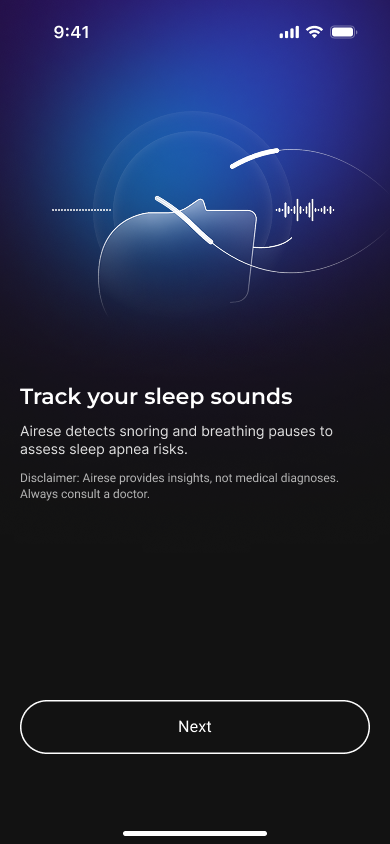 Introduction
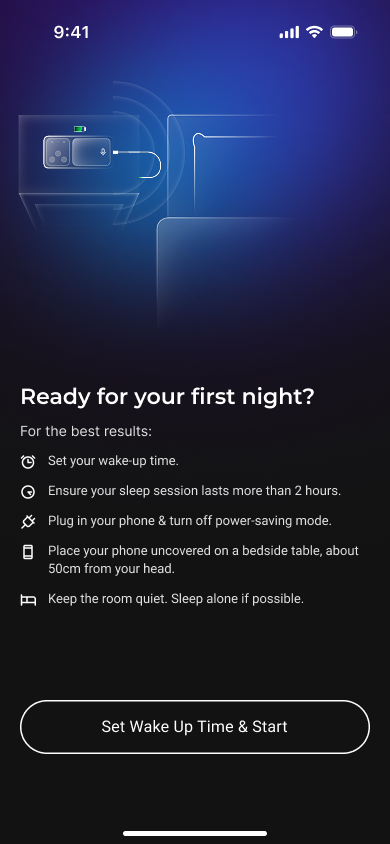 First-night setup
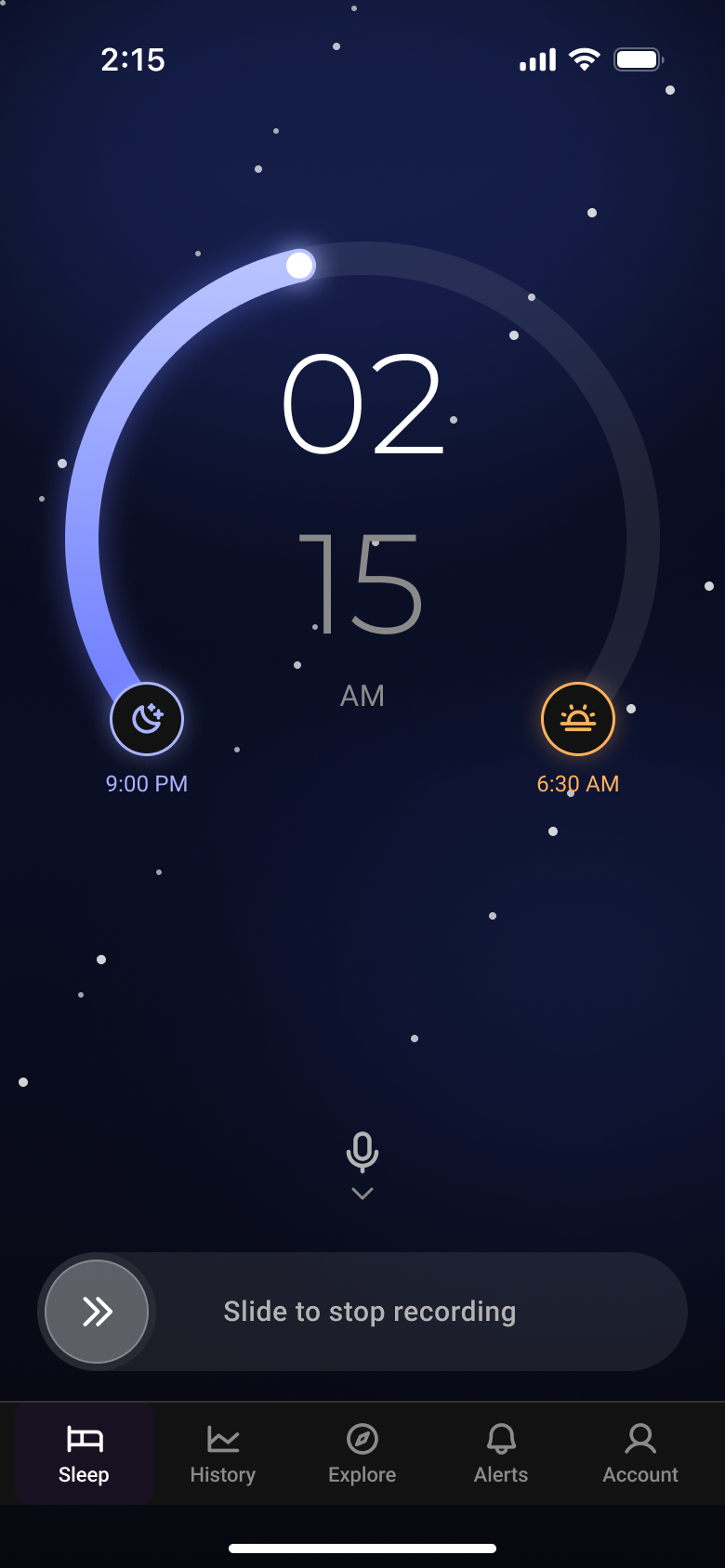 Recording
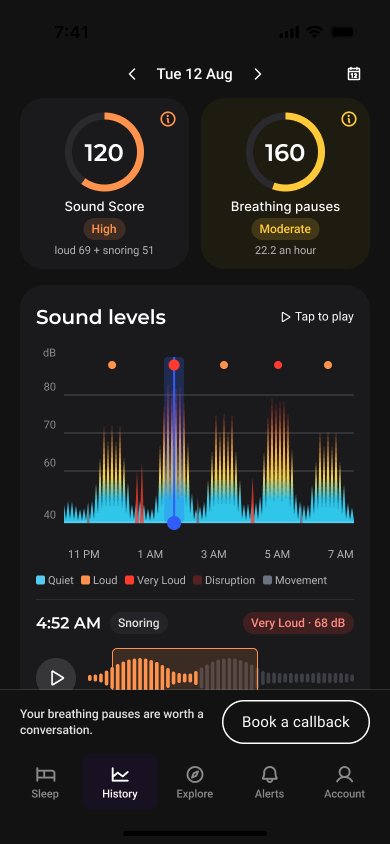 Morning results